Mastering a verb as fundamental and versatile as "poner" in its more advanced forms—specifically commands and its close ties to the subjunctive mood—marks a significant leap in your Spanish proficiency. It's often where the rubber meets the road for intermediate learners, distinguishing those who can simply convey basic ideas from those who command the language with precision and nuance. This isn't just about memorizing conjugations; it's about understanding the underlying logic that makes Spanish so expressive.
At a Glance: Commanding "Poner" and Its Subjunctive Soul
- "Poner" is Irregular: Its command forms, especially the tú affirmative, deviate from standard patterns.
- Subjunctive's Shadow: All negative commands and all formal commands (Ud., Uds., nosotros) for "poner" are identical to its present subjunctive forms.
- Crucial "G": The "g" in pong- is your key to correctly forming most commands and subjunctive uses of "poner."
- Context is King: The choice between formal and informal commands, and positive vs. negative, dictates the specific form you'll use.
- Beyond Commands: Understanding "poner" in the subjunctive extends to expressing desires, doubts, recommendations, and more.
Why "Poner" Commands & Subjunctive Are a Rite of Passage
Think of "poner" as the Swiss Army knife of Spanish verbs. It means "to put" or "to place," but its semantic range expands into "to set," "to turn on (a device)," "to make (an effort)," "to cost," and countless idiomatic expressions. Given its ubiquity, being able to confidently issue commands with "poner" or use it correctly in subjunctive contexts is non-negotiable for fluid conversation and clear communication.
Many learners find themselves tripping over "poner" because its command forms aren't always straightforward. While some verbs follow predictable patterns for commands, "poner" throws in a few curveballs, particularly with its informal affirmative tú command and the consistent use of the present subjunctive for nearly all other imperative situations. It's a prime example of where tackling irregular Spanish verbs truly pays off.
Deciphering "Poner" in the Imperative: Your Command Center
The imperative mood in Spanish is all about giving orders, making requests, or offering suggestions. For "poner," these commands are split into positive (do it!) and negative (don't do it!) forms, and crucially, they vary depending on who you're speaking to (your "you").
Let's break down each form, highlighting its nuances and how it connects to the subjunctive mood.
The Informal "You" (Tú): Direct and Distinct
When you're speaking to a friend, family member, or someone you address informally, you'll use the tú command forms. This is where "poner" first reveals its irregularity.
- Positive Tú Command: "Pon"
- This is one of Spanish's famous "eight irregular tú commands." Instead of the regular
pón(which would be derived from the third-person singular present indicative), it shortens and takes on a unique form. - Example: ¡Pon la mesa! (Set the table!)
- Example: Pon atención en clase para entender mejor los temas. (Pay attention in class to better understand the topics.)
- Tip: Think of it as a short, sharp instruction.
- Negative Tú Command: "No Pongas"
- Here's where the subjunctive makes its first clear appearance. For all negative commands in Spanish, you use the present subjunctive form. "Poner" is no exception.
- The "g" that appears in "pongas" is a hallmark of "poner" in its subjunctive and formal imperative forms.
- Example: ¡No pongas eso ahí! (Don't put that there!)
- Example: No pongas excusas cuando no cumplas tus objetivos; busca soluciones. (Do not make excuses when you fail to meet your goals; look for solutions.)
- Connection: This is the same form you'd use in a subjunctive clause like Es importante que no pongas... (It's important that you don't put...).
The Formal "You" (Ud., Uds.) and "We" (Nosotros): The Subjunctive Reigns Supreme
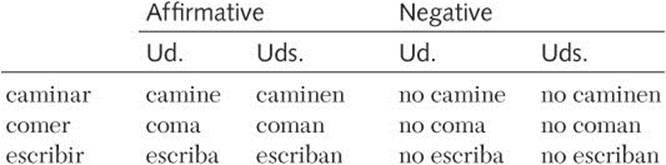
For formal commands (addressing someone with respect or multiple people formally) and for "let's" commands, Spanish consistently draws from the present subjunctive. This simplifies things somewhat, as once you know the present subjunctive for "poner," you know these command forms.
- Formal Singular "You" (Ud.): "Ponga"
- This is the third-person singular present subjunctive of "poner."
- Example: Ponga su firma aquí, por favor. (Please put your signature here.)
- Example: Ponga su mejor esfuerzo en cada proyecto que realice. (Put your best effort into every project you undertake.)
- Negative: No ponga (Don't put). No ponga todos sus ahorros en una sola inversión; diversifique. (Do not put all your savings into one investment; diversify.)
- "Let's" Command (Nosotros): "Pongamos"
- This is the first-person plural present subjunctive of "poner." It means "let's put" or "let's place."
- Example: ¡Pongamos la música! (Let's put on the music!)
- Example: Pongamos una fecha para nuestra próxima reunión. (Let's set a date for our next meeting.)
- Negative: No pongamos (Let's not put). No pongamos límites a nuestra creatividad; exploremos todas las ideas. (Let's not put limits on our creativity; let's explore all ideas.)
- Formal Plural "You All" (Uds.): "Pongan"
- This is the third-person plural present subjunctive of "poner."
- Example: Pongan los libros en la estantería. (Put the books on the shelf.)
- Example: Pongan en práctica lo aprendido en el curso. (Put into practice what you have learned in the course.)
- Negative: No pongan (Don't put). No pongan barreras a nuevas oportunidades; estén abiertos a cambios. (Do not put up barriers to new opportunities; be open to change.)
The Informal Plural "You All" (Vosotros) in Spain: A Unique Twist
While less common outside of Spain, understanding the vosotros forms is part of a complete picture.
- Positive Vosotros Command: "Poned"
- For -er and -ir verbs, the positive vosotros command often replaces the 'r' of the infinitive with a 'd'. This is regular for this conjugation.
- Example: Poned vuestras chaquetas en el perchero. (Put your jackets on the coat rack.)
- Example: Poned la mesa antes de que lleguen los invitados. (Set the table before the guests arrive.)
- Negative Vosotros Command: "No Pongáis"
- Like all negative commands, this one uses the present subjunctive form.
- Example: No pongáis los pies en la mesa. (Don't put your feet on the table.)
- Example: No pongáis vuestra salud en riesgo por trabajar demasiado. (Do not put your health at risk by overworking.)
All "Poner" Commands at a Glance
| Subject Pronoun | Positive Command | Negative Command | Context |
|---|---|---|---|
| tú | Pon | No pongas | Informal singular "you" |
| Ud. | Ponga | No ponga | Formal singular "you" |
| nosotros | Pongamos | No pongamos | "Let's" (we) |
| vosotros | Poned | No pongáis | Informal plural "you" (Spain) |
| Uds. | Pongan | No pongan | Formal plural "you all" (Latin America/Spain) |
This table, drawing directly from reliable sources like spanishconjugation.net and verbmastery.com, provides a solid reference for all forms. |
The Subjunctive's Role: Beyond Simple Commands
It's critical to understand that the connection between "poner" commands and the subjunctive mood isn't just a quirk; it's a fundamental aspect of mastering the Spanish subjunctive mood. The subjunctive is a mood used to express uncertainty, subjectivity, emotion, desire, doubt, recommendations, and hypothetical situations.
- Why the Overlap?
- Formal Commands (Ud./Uds./Nosotros): When you issue a formal command, you're essentially suggesting or requesting an action. This often falls into the realm of subjectivity or desire, which is precisely where the subjunctive thrives. Think of "Ponga la mesa" as a shortened version of "Quiero que ponga la mesa" (I want you to set the table) or "Es importante que ponga la mesa" (It's important that you set the table).
- Negative Commands (All Persons): When you forbid someone from doing something, you're expressing a desire (that they not do it) or a recommendation (that they avoid it). Again, this aligns perfectly with the subjunctive's domain. "No pongas eso" is similar in sentiment to "Te recomiendo que no pongas eso" (I recommend that you don't put that).
So, while you might learn the command forms as rote conjugations, recognizing their subjunctive roots deepens your understanding of the underlying logic of Spanish moods. This understanding isn't merely academic; it helps you intuitively form commands for other irregular verbs once you know their present subjunctive. For instance, the Ud. command forhacerishaga, which is its present subjunctive form, just likepongaforponer.
Putting "Poner" Into Practice: Real-World Scenarios
Let's dive into more examples to solidify your grasp. Remember, context will always be your guide.
- Direct Instructions (Informal):
- Amigo, pon tu móvil en silencio durante la película. (Friend, put your phone on silent during the movie.)
- Mamá, no pongas las llaves ahí, las perderás. (Mom, don't put the keys there, you'll lose them.)
- Formal Requests in a Professional Setting:
- Señora García, ponga el documento en mi escritorio cuando termine. (Mrs. García, put the document on my desk when you finish.)
- Por favor, señores, no pongan el proyector tan cerca de la pantalla. (Please, gentlemen, don't put the projector so close to the screen.)
- Collaborative Suggestions ("Let's"):
- Pongamos más esfuerzo en este último proyecto. (Let's put more effort into this last project.)
- No pongamos el carro tan lejos; no hay muchos lugares. (Let's not put the car so far away; there aren't many spots.)
- Figurative Usage: "Poner" often translates beyond simply "put" or "place."
- ¡Pon atención! (Pay attention!) - Common tú command.
- No pongas pretextos. (Don't make excuses.) - Common tú negative command.
- Les ruego que pongan su granito de arena. (I beg you all to do your part / literally: put your grain of sand.) - Uds. command, used figuratively.
These examples underscore the versatility of "poner" and the importance of using the correct command form to convey your message accurately and respectfully. For a deeper dive into all conjugations of "poner," including its present indicative and future tenses, explore The complete guide to poner.
Common Pitfalls and How to Avoid Them
Even seasoned speakers sometimes stumble. Here are the most frequent errors with "poner" commands and how to steer clear of them:
- Confusing Tú Affirmative and Negative: The most common mistake is using
pongasfor a positive tú command. Remember:¡Pon!(positive) vs.¡No pongas!(negative). The direct, informal "do it" form for "poner" is uniquelypon. - Forgetting the "G": The presence of the "g" in
pong-is almost universal for subjunctive forms and most commands of "poner." Without it, you might accidentally conjugate an entirely different verb or create a non-existent word (e.g.,ponainstead ofponga). - Mixing Formal and Informal: It's crucial to be consistent with your level of formality. If you're using Ud. for other verbs, stick to Ponga for "poner." Shifting between tú and Ud. within the same conversation can sound awkward or even disrespectful. This is a core part of the nuances of Spanish imperative commands.
- Overlooking Object Pronouns: When using object pronouns with positive commands, they attach directly to the end of the verb.
- ¡Ponlo aquí! (Put it here!) -
pon+lo(the direct object pronoun "it"). - ¡Pónganmelos! (Put them on for me!) -
pongan+me(indirect object) +los(direct object).
When using object pronouns with negative commands, they precede the verb: - ¡No lo pongas aquí! (Don't put it here!)
- ¡No me los pongan! (Don't put them on for me!)
This interplay is a slightly more advanced aspect of navigating direct and indirect object pronouns in conjunction with commands.
Beyond Commands: "Poner" in Broader Subjunctive Contexts
While commands are a clear application of the subjunctive forms, it's worth noting that "poner" appears in countless other subjunctive constructions. These are vital for expressing complex ideas.
For example:
- Desire/Request: Espero que pongan atención. (I hope that they pay attention.)
- Doubt/Uncertainty: Dudo que él ponga su firma tan fácilmente. (I doubt that he puts his signature so easily.)
- Emotion: Me alegra que pongas tanto esfuerzo. (It makes me happy that you put so much effort.)
- Recommendations: Te sugiero que pongas tu alarma más temprano. (I suggest that you set your alarm earlier.)
- Impersonal Expressions: Es importante que pongamos las cosas en orden. (It's important that we put things in order.)
In all these cases, the verb form of "poner" remainspongas,ponga,pongamos, orpongan, reinforcing the idea that mastering these forms for commands also equips you for a vast array of subjunctive usages. This consistentpong-stem in the subjunctive is a key element of understanding Spanish verb conjugation.
Quick Grammar Q&A
Q: Why is pon so irregular for the tú affirmative command?
A: "Pon" is one of a handful of highly common irregular tú affirmative commands (like ven, di, sal, haz, ten, ve, sé). These often stem from historical linguistic changes and are simply part of the memorization required for fluent Spanish. There isn't a neat rule, but rather they are exceptions that have become standard.
Q: Do I always use the subjunctive for negative commands, regardless of the verb?
A: Yes, absolutely. This is a universal rule in Spanish: all negative commands (for tú, Ud./Uds., nosotros, vosotros) use the corresponding present subjunctive form of the verb.
Q: What's the main difference between pon and ponga?
A: Pon is the informal, singular positive command ("You, do it!"). Ponga is the formal, singular positive command ("You [formal], do it!"), and it's also the Ud. form of the present subjunctive. The choice depends entirely on your relationship with the person you're speaking to.
Your Next Steps to Mastering "Poner" Commands
Now that you have a comprehensive understanding of "poner" in its command and subjunctive forms, it's time to put that knowledge into action.
- Practice Conjugation: Write out the command forms (positive and negative) for "poner" multiple times without looking. Pay special attention to the irregular tú affirmative (
pon) and the consistentginpong-. - Create Your Own Sentences: Go beyond the examples provided. Think of everyday situations where you might need to give an instruction with "poner" and formulate sentences for different "you" forms.
- Listen Actively: Pay attention to how native speakers use "poner" commands in movies, songs, podcasts, or real-life conversations. Notice the context and the level of formality.
- Drill with Object Pronouns: Once you're comfortable with the basic commands, challenge yourself by adding direct and indirect object pronouns. This will push your fluency to the next level.
- Expand to Other Subjunctive Uses: Practice using "poner" in other subjunctive constructions, like after verbs of emotion, doubt, or desire. This will reinforce your understanding of the mood's broader function.
By consistently applying these strategies, you'll not only master "Advanced Grammar: Subjunctive and Commands with 'Poner'" but also significantly enhance your overall command of Spanish, allowing you to express yourself with greater accuracy and confidence.