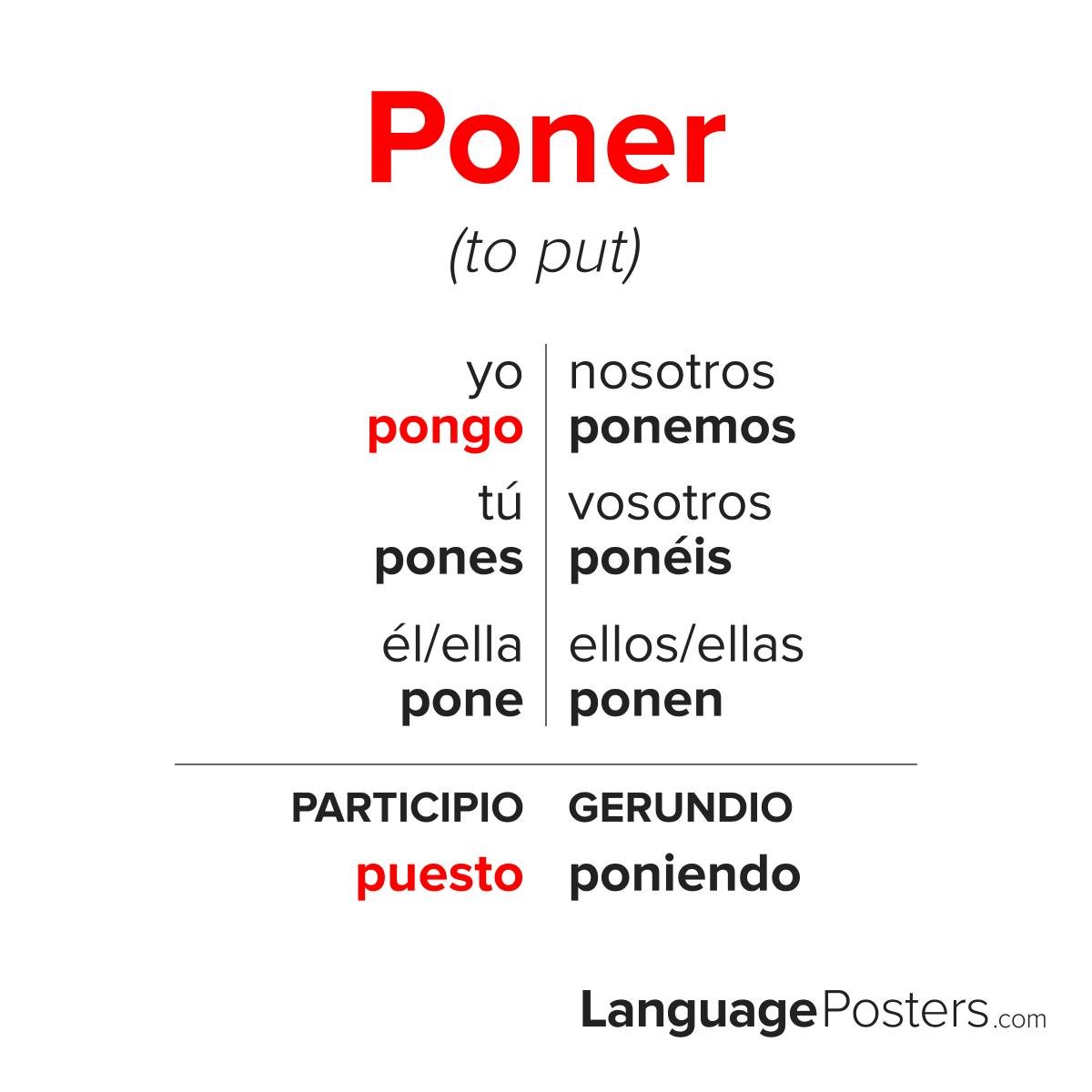
If you're delving into the Spanish language, you've undoubtedly stumbled upon poner. Far more than a simple verb, the Conjugation & Core Meanings of Poner unlock a vast spectrum of expression, from daily actions to nuanced feelings. It's an essential, often irregular, verb that’s a cornerstone of conversational fluency. Mastering poner isn't just about memorizing tables; it's about understanding its dynamic role in Spanish, revealing its incredible versatility.
At a Glance: What You’ll Discover About Poner
- A Powerhouse Verb: Poner is one of Spanish’s most versatile verbs, meaning "to put," "to place," "to set," and much more.
- Irregular Yet Predictable: While it deviates from standard conjugation patterns, its irregularities follow logical shifts once you grasp them.
- Moods Matter: Learn how poner changes in the indicative (facts), subjunctive (desires/doubts), and imperative (commands) moods.
- Beyond the Basic Translation: Explore how ponerse (its reflexive form) and various idioms drastically expand its utility.
- Practical Examples: Concrete sentences illuminate each conjugation and meaning, helping you see poner in action.
Poner: The Unsung Hero of Spanish Verbs
At its heart, poner means "to put" or "to place." But like many high-frequency verbs, it's a chameleon, adapting its meaning depending on context, accompanying prepositions, or whether it's used reflexively (ponerse). From laying the groundwork for a meal to setting the mood for a party, poner is constantly at play.
Before we dive into the nitty-gritty, let's establish its fundamental forms:
- Infinitive: Poner (to put, to set)
- Past Participle: Puesto (put, placed, set)
- Gerund: Poniendo (putting, placing, setting)
These three forms are your entry points, forming the backbone for many compound tenses and continuous actions. Understanding how they interact with auxiliary verbs is key to unlocking poner's full potential.
Navigating the Indicative Mood: Speaking of Facts and Realities
The indicative mood is your go-to for stating facts, describing definite actions, and discussing certainties. Think of it as the bedrock of everyday conversation.
Present Tense: What’s Happening Now or Habitually
The present tense of poner describes actions occurring right now, ongoing situations, or habitual behaviors. Notice the "g" in the "yo" form – a classic irregularity that sets the tone for poner.
| Subject | Conjugation | Example | Translation |
|---|---|---|---|
| Yo | Pongo | Yo pongo la mesa. | I set the table. |
| Tú | Pones | Tú pones la ropa. | You put the clothes. |
| Ud./Él/Ella | Pone | Ella pone la radio. | She turns on the radio. |
| Nosotros/as | Ponemos | Nosotros ponemos atención. | We pay attention. |
| Vosotros/as | Ponéis | Vosotros ponéis los libros. | You all put the books. |
| Uds./Ellos/Ellas | Ponen | Ellos ponen las reglas. | They set the rules. |
| Insight: The "yo pongo" form is the most common irregularity you'll encounter with -er verbs that end in -go. Memorize this one first! |
Imperfect Tense: Describing Ongoing Past Actions
When you want to talk about past actions that were habitual, ongoing, or served as background information, the imperfect tense is your friend. It gives a sense of continuity in the past.
| Subject | Conjugation | Example | Translation |
|---|---|---|---|
| Yo | Ponía | Cuando era niño, ponía mis juguetes aquí. | When I was a child, I used to put my toys here. |
| Tú | Ponías | Siempre ponías música en la fiesta. | You always used to put on music at the party. |
| Ud./Él/Ella | Ponía | Él ponía el despertador cada noche. | He would set the alarm every night. |
| Nosotros/as | Poníamos | Antes, poníamos flores en la ventana. | Before, we used to put flowers in the window. |
| Vosotros/as | Poníais | Vosotros poníais la tele temprano. | You all used to turn on the TV early. |
| Uds./Ellos/Ellas | Ponían | Ellos ponían la mesa todos los días. | They used to set the table every day. |
Preterite Tense: Completed Actions in the Past
The preterite tense is for specific, completed actions in the past. Unlike the imperfect, it views the action as a single, finished event. This is where poner gets particularly irregular!
| Subject | Conjugation | Example | Translation |
|---|---|---|---|
| Yo | Puse | Ayer puse las llaves aquí. | Yesterday I put the keys here. |
| Tú | Pusiste | ¿Dónde pusiste el libro? | Where did you put the book? |
| Ud./Él/Ella | Puso | Ella puso la comida en la mesa. | She put the food on the table. |
| Nosotros/as | Pusimos | Nosotros pusimos todo en orden. | We put everything in order. |
| Vosotros/as | Pusisteis | ¿Qué pusisteis en la caja? | What did you all put in the box? |
| Uds./Ellos/Ellas | Pusieron | Ellos pusieron la bandera. | They put up the flag. |
Key Irregularity: The "u" stem change (pus-) is a hallmark of poner in the preterite, along with unique endings. This pattern is shared with other irregular verbs like saber (sup-) and caber (cup-). |
Future Tense: What Will Happen
The future tense, as its name suggests, talks about actions or events that will occur at a later time. Poner has a slight stem change here too.
| Subject | Conjugation | Example | Translation |
|---|---|---|---|
| Yo | Pondré | Mañana pondré un aviso. | Tomorrow I will put up a notice. |
| Tú | Pondrás | ¿Cuándo pondrás la mesa? | When will you set the table? |
| Ud./Él/Ella | Pondrá | Él pondrá música en la fiesta. | He will put on music at the party. |
| Nosotros/as | Pondremos | Nosotros pondremos mucho esfuerzo. | We will put in a lot of effort. |
| Vosotros/as | Pondréis | Vosotros pondréis la manta. | You all will put the blanket. |
| Uds./Ellos/Ellas | Pondrán | Ellos pondrán los platos. | They will put the plates. |
| Note: The future tense stem for poner is pondr-, another key irregularity to remember. |
Conditional Tense: What Would Happen
The conditional tense expresses hypothetical actions or events that would happen under certain conditions. It's also used for polite requests.
| Subject | Conjugation | Example | Translation |
|---|---|---|---|
| Yo | Pondría | Yo pondría la mesa si tuviera tiempo. | I would set the table if I had time. |
| Tú | Pondrías | ¿Qué pondrías en ese lugar? | What would you put in that place? |
| Ud./Él/Ella | Pondría | Ella pondría un poco de sal. | She would put a little salt. |
| Nosotros/as | Pondríamos | Nosotros pondríamos más atención. | We would pay more attention. |
| Vosotros/as | Pondríais | Vosotros pondríais el dinero allí. | You all would put the money there. |
| Uds./Ellos/Ellas | Pondrían | Ellos pondrían el árbol de Navidad. | They would put up the Christmas tree. |
| Connection: Notice the conditional tense shares the same pondr- stem as the future tense. This is a common pattern for many irregular verbs. |
Compound Indicative Tenses: Layering Actions with Haber + Puesto
Compound tenses combine an auxiliary verb (in this case, haber) with the past participle (puesto) to create more complex time references.
Present Perfect: Actions Relevant to Now
The present perfect describes actions completed in the recent past or with relevance to the present moment. Think "have put."
| Subject | Conjugation | Example | Translation |
|---|---|---|---|
| Yo | He puesto | Yo he puesto las llaves sobre la mesa. | I have put the keys on the table. |
| Tú | Has puesto | ¿Has puesto la basura fuera? | Have you put the trash out? |
| Ud./Él/Ella | Ha puesto | Ella ha puesto su abrigo. | She has put on her coat. |
| Nosotros/as | Hemos puesto | Nosotros hemos puesto mucho esfuerzo. | We have put in a lot of effort. |
| Vosotros/as | Habéis puesto | Vosotros habéis puesto la música. | You all have put on the music. |
| Uds./Ellos/Ellas | Han puesto | Ellos han puesto la fecha. | They have set the date. |
Pluperfect (Past Perfect): Actions Before Another Past Event
The pluperfect tells you about actions that had already occurred before another past action or point in time. Think "had put."
| Subject | Conjugation | Example | Translation |
|---|---|---|---|
| Yo | Había puesto | Yo había puesto las llaves antes de salir. | I had put the keys before leaving. |
| Tú | Habías puesto | Tú ya habías puesto la mesa. | You had already set the table. |
| Ud./Él/Ella | Había puesto | Él había puesto la carta en el buzón. | He had put the letter in the mailbox. |
| Nosotros/as | Habíamos puesto | Nosotros habíamos puesto el plan en marcha. | We had put the plan into action. |
| Vosotros/as | Habíais puesto | Vosotros ya habíais puesto los libros. | You all had already put the books. |
| Uds./Ellos/Ellas | Habían puesto | Ellos habían puesto las flores. | They had put the flowers. |
Future Perfect: Actions Completed by a Future Point
Use the future perfect to talk about actions that will have been completed by a certain point in the future. Think "will have put."
| Subject | Conjugation | Example | Translation |
|---|---|---|---|
| Yo | Habré puesto | Cuando llegues, yo habré puesto la cena. | When you arrive, I will have put dinner on. |
| Tú | Habrás puesto | Para entonces, ¿habrás puesto todo? | By then, will you have put everything away? |
| Ud./Él/Ella | Habrá puesto | Él habrá puesto el cartel. | He will have put up the sign. |
| Nosotros/as | Habremos puesto | Para el lunes, habremos puesto los datos. | By Monday, we will have put in the data. |
| Vosotros/as | Habréis puesto | Cuando vuelvan, habréis puesto el abrigo. | When you all return, you will have put on the coat. |
| Uds./Ellos/Ellas | Habrán puesto | Para la noche, habrán puesto las luces. | By night, they will have put up the lights. |
Conditional Perfect: What Would Have Happened
The conditional perfect describes actions that would have occurred under certain conditions in the past, often expressing regret or unfulfilled possibilities. Think "would have put."
| Subject | Conjugation | Example | Translation |
|---|---|---|---|
| Yo | Habría puesto | Yo habría puesto la mesa si hubiera sabido. | I would have set the table if I had known. |
| Tú | Habrías puesto | Tú habrías puesto la mano si te lo pidieran. | You would have put your hand up if they asked you. |
| Ud./Él/Ella | Habría puesto | Ella habría puesto el libro allí. | She would have put the book there. |
| Nosotros/as | Habríamos puesto | Nosotros habríamos puesto más empeño. | We would have put in more effort. |
| Vosotros/as | Habríais puesto | Vosotros habríais puesto la radio. | You all would have put on the radio. |
| Uds./Ellos/Ellas | Habrían puesto | Ellos habrían puesto las cosas en su lugar. | They would have put things in their place. |
Preterite Perfect (Past Anterior): A Brief Mention
The Preterite Perfect (or Past Anterior) is rarely used in modern conversational Spanish, primarily appearing in very formal writing or literature to denote an action immediately prior to another past action. For most learners, it's a tense you recognize rather than actively use. It's formed with the preterite of haber + puesto (e.g., hube puesto).
Navigating the Subjunctive Mood: Expressing Desires, Doubts, and Emotions
The subjunctive mood steps in when you're talking about things that aren't certain — wishes, doubts, emotions, recommendations, or hypothetical situations. It's often triggered by specific conjunctions or expressions.
Present Subjunctive: Wishes and Uncertainty Now
The present subjunctive expresses desires, doubts, or suggestions in the present or future.
| Subject | Conjugation | Example | Translation |
|---|---|---|---|
| Yo | Ponga | Espero que yo ponga la mesa a tiempo. | I hope that I set the table on time. |
| Tú | Pongas | Quiero que tú pongas tus libros aquí. | I want you to put your books here. |
| Ud./Él/Ella | Ponga | Quizás ella ponga su firma. | Perhaps she puts her signature. |
| Nosotros/as | Pongamos | Sugiero que pongamos las cosas en orden. | I suggest that we put things in order. |
| Vosotros/as | Pongáis | Es necesario que pongáis atención. | It's necessary that you all pay attention. |
| Uds./Ellos/Ellas | Pongan | Es importante que ellos pongan la fecha. | It's important that they put the date. |
| Formation Tip: The present subjunctive forms of poner are derived from the "yo" form of the present indicative (pongo) by dropping the "o" and adding the opposite vowel endings (e.g., -a, -as, -a, -amos, -áis, -an for -er/-ir verbs). |
Imperfect Subjunctive: Hypotheticals and Past Wishes
The imperfect subjunctive is used for hypothetical situations, desires, or wishes in the past, often in "if" clauses or with expressions of emotion/doubt about past events. It has two common forms, both interchangeable in most contexts.
Form 1: -ra endings
| Subject | Conjugation | Example | Translation |
|---|---|---|---|
| Yo | Pusiera | Si yo pusiera más atención, entendería. | If I paid more attention, I would understand. |
| Tú | Pusieras | Me gustaría que pusieras tu nombre. | I would like you to put your name. |
| Ud./Él/Ella | Pusiera | Quería que ella pusiera el libro. | I wanted her to put the book. |
| Nosotros/as | Pusiéramos | Ojalá pusiéramos más de nuestra parte. | I wish we would put in more effort. |
| Vosotros/as | Pusierais | Si pusierais el dinero, ayudaría. | If you all put the money, it would help. |
| Uds./Ellos/Ellas | Pusieran | Era importante que ellos pusieran todo. | It was important that they put everything. |
| Form 2: -se endings | |||
| Subject | Conjugation | Example | Translation |
| :------------ | :---------- | :--------------------------------------------- | :---------------------------------------- |
| Yo | Pusiese | Si yo pusiese las cosas en orden... | If I put things in order... |
| Tú | Pusieses | No creía que pusieses tanta música. | I didn't think you would put on so much music. |
| Ud./Él/Ella | Pusiese | Pedí que ella pusiese la maleta aquí. | I asked her to put the suitcase here. |
| Nosotros/as | Pusiésemos | Si pusiésemos una fecha... | If we set a date... |
| Vosotros/as | Pusieseis | Tal vez pusieseis atención. | Perhaps you all would pay attention. |
| Uds./Ellos/Ellas | Pusiesen | Dudaba que ellos pusiesen objeciones. | I doubted they would put forward objections. |
| Important: Both forms are correct and interchangeable in most Spanish-speaking regions, though -ra forms are generally more common. |
Future Subjunctive: A Literary Relic
Similar to the Preterite Perfect Indicative, the Future Subjunctive (pusiere) is almost exclusively found in legal documents or classic literature. You'll likely encounter it more in academic settings or historical texts than in daily conversation.
Compound Subjunctive Tenses: Adding Layers of Doubt and Possibility
Just like the indicative mood, the subjunctive also has compound tenses, using forms of haber with puesto.
Present Perfect Subjunctive: Doubts About Recent Past
Used for actions that "may have," "might have," or "have" occurred in the past, but the speaker expresses doubt, emotion, or uncertainty about them.
| Subject | Conjugation | Example | Translation |
|---|---|---|---|
| Yo | Haya puesto | No creo que yo haya puesto el despertador. | I don't think I have set the alarm. |
| Tú | Hayas puesto | Me alegra que hayas puesto los platos. | I'm glad you have put the plates. |
| Ud./Él/Ella | Haya puesto | Es una lástima que ella haya puesto excusas. | It's a shame she has put forward excuses. |
| Nosotros/as | Hayamos puesto | Ojalá hayamos puesto todo en orden. | Hopefully, we have put everything in order. |
| Vosotros/as | Hayáis puesto | Dudo que hayáis puesto la música. | I doubt you all have put on the music. |
| Uds./Ellos/Ellas | Hayan puesto | Es bueno que ellos hayan puesto atención. | It's good that they have paid attention. |
Pluperfect Subjunctive: Hypotheticals About the Past
This tense expresses actions that "would have," "could have," or "might have" occurred under certain conditions in the past, or expresses regret/doubt about something that had happened.
Form 1: -ra endings
| Subject | Conjugation | Example | Translation |
|---|---|---|---|
| Yo | Hubiera puesto | Si yo hubiera puesto más atención, habría aprobado. | If I had paid more attention, I would have passed. |
| Tú | Hubieras puesto | Quería que hubieras puesto el libro allí. | I wanted you to have put the book there. |
| Ud./Él/Ella | Hubiera puesto | No creía que ella hubiera puesto objeciones. | I didn't think she would have put forward objections. |
| Nosotros/as | Hubiéramos puesto | Nos habría gustado que hubiéramos puesto la mesa. | We would have liked us to have set the table. |
| Vosotros/as | Hubierais puesto | Si hubierais puesto el dinero, habrían ayudado. | If you all had put the money, they would have helped. |
| Uds./Ellos/Ellas | Hubieran puesto | Era vital que ellos hubieran puesto su firma. | It was vital that they had put their signature. |
| Form 2: -se endings | |||
| Subject | Conjugation | Example | Translation |
| :------------ | :----------------- | :----------------------------------------------- | :---------------------------------------------- |
| Yo | Hubiese puesto | Si yo hubiese puesto mi granito de arena... | If I had put in my two cents' worth... |
| Tú | Hubieses puesto | Me sorprendió que hubieses puesto la música. | It surprised me that you had put on the music. |
| Ud./Él/Ella | Hubiese puesto | Deseaba que él hubiese puesto el cartel. | I wished he had put up the sign. |
| Nosotros/as | Hubiésemos puesto | Ojalá hubiésemos puesto más interés. | I wish we had put in more interest. |
| Vosotros/as | Hubieseis puesto | Si hubieseis puesto la mesa, todo iría mejor. | If you all had set the table, everything would be better. |
| Uds./Ellos/Ellas | Hubiesen puesto | Era una pena que hubiesen puesto esa película. | It was a shame they had put on that movie. |
Directing with the Imperative Mood: Commands and Instructions
The imperative mood is straightforward: it’s for giving direct commands or instructions. Poner is irregular even here, especially in the tú form.
Affirmative Imperative: "Do This!"
| Subject | Conjugation | Example | Translation |
|---|---|---|---|
| Tú | ¡Pon! | ¡Pon la mesa! | Set the table! |
| Ud. | ¡Ponga! | ¡Ponga su nombre aquí! | Put your name here! |
| Nosotros/as | ¡Pongamos! | ¡Pongamos la radio! | Let's put on the radio! |
| Vosotros/as | ¡Poned! | ¡Poned los libros! | Put the books! |
| Uds. | ¡Pongan! | ¡Pongan atención! | Pay attention! |
| Irregularity: Note the irregular tú affirmative command ¡pon! For other forms, the imperative borrows from the present subjunctive. |
Negative Imperative: "Don't Do This!"
To give a negative command, you simply add "no" before the present subjunctive forms.
| Subject | Conjugation | Example | Translation |
|---|---|---|---|
| Tú | ¡No pongas! | ¡No pongas eso ahí! | Don't put that there! |
| Ud. | ¡No ponga! | ¡No ponga la mano aquí! | Don't put your hand here! |
| Nosotros/as | ¡No pongamos! | ¡No pongamos excusas! | Let's not make excuses! |
| Vosotros/as | ¡No pongáis! | ¡No pongáis los pies! | Don't put your feet! |
| Uds. | ¡No pongan! | ¡No pongan esa música! | Don't put on that music! |
Actions in Progress: Continuous Tenses with Estar + Poniendo
Continuous tenses (also called progressive tenses) describe actions that are currently happening or were happening over a period of time. They’re formed using a conjugated form of estar (to be) and the gerund (poniendo).
Present Continuous: Happening Right Now
| Subject | Conjugation | Example | Translation |
|---|---|---|---|
| Yo | Estoy poniendo | Yo estoy poniendo la mesa. | I am setting the table. |
| Tú | Estás poniendo | Tú estás poniendo tu abrigo. | You are putting on your coat. |
| Ud./Él/Ella | Está poniendo | Ella está poniendo la radio. | She is turning on the radio. |
| Nosotros/as | Estamos poniendo | Nosotros estamos poniendo esfuerzo. | We are putting in effort. |
| Vosotros/as | Estáis poniendo | Vosotros estáis poniendo los libros. | You all are putting the books. |
| Uds./Ellos/Ellas | Están poniendo | Ellos están poniendo las flores. | They are putting the flowers. |
Imperfect Continuous: Was Happening
| Subject | Conjugation | Example | Translation |
|---|---|---|---|
| Yo | Estaba poniendo | Yo estaba poniendo la mesa cuando llamaste. | I was setting the table when you called. |
| Tú | Estabas poniendo | Tú estabas poniendo la música. | You were putting on the music. |
| Ud./Él/Ella | Estaba poniendo | Él estaba poniendo atención. | He was paying attention. |
| Nosotros/as | Estábamos poniendo | Nosotros estábamos poniendo las sillas. | We were putting the chairs. |
| Vosotros/as | Estabais poniendo | Vosotros estabais poniendo los carteles. | You all were putting up the signs. |
| Uds./Ellos/Ellas | Estaban poniendo | Ellos estaban poniendo los nombres. | They were putting the names. |
Preterite Continuous: Was Happening (specific start/end)
| Subject | Conjugation | Example | Translation |
|---|---|---|---|
| Yo | Estuve poniendo | Ayer estuve poniendo la mesa por una hora. | Yesterday I was setting the table for an hour. |
| Tú | Estuviste poniendo | ¿Cuánto tiempo estuviste poniendo la alfombra? | How long were you putting the rug? |
| Ud./Él/Ella | Estuvo poniendo | Ella estuvo poniendo la ropa todo el día. | She was putting away clothes all day. |
| Nosotros/as | Estuvimos poniendo | Nosotros estuvimos poniendo un buen esfuerzo. | We were putting in a good effort. |
| Vosotros/as | Estuvisteis poniendo | Vosotros estuvisteis poniendo los muebles. | You all were putting the furniture. |
| Uds./Ellos/Ellas | Estuvieron poniendo | Ellos estuvieron poniendo las plantas. | They were putting the plants. |
Future Continuous: Will Be Happening
| Subject | Conjugation | Example | Translation |
|---|---|---|---|
| Yo | Estaré poniendo | Mañana a esta hora, estaré poniendo la mesa. | Tomorrow at this time, I will be setting the table. |
| Tú | Estarás poniendo | Pronto estarás poniendo tu maleta. | Soon you will be packing your suitcase. |
| Ud./Él/Ella | Estará poniendo | Él estará poniendo las decoraciones. | He will be putting up the decorations. |
| Nosotros/as | Estaremos poniendo | Nosotros estaremos poniendo nuestro mejor esfuerzo. | We will be putting in our best effort. |
| Vosotros/as | Estaréis poniendo | A la tarde, estaréis poniendo los vasos. | In the afternoon, you all will be putting the glasses. |
| Uds./Ellos/Ellas | Estarán poniendo | Ellos estarán poniendo los carteles. | They will be putting up the signs. |
Conditional Continuous: Would Be Happening
| Subject | Conjugation | Example | Translation |
|---|---|---|---|
| Yo | Estaría poniendo | Yo estaría poniendo la mesa si no lloviera. | I would be setting the table if it weren't raining. |
| Tú | Estarías poniendo | ¿Tú estarías poniendo esa película? | Would you be putting on that movie? |
| Ud./Él/Ella | Estaría poniendo | Ella estaría poniendo su ropa ahora. | She would be putting away her clothes now. |
| Nosotros/as | Estaríamos poniendo | Nosotros estaríamos poniendo los platos. | We would be putting the dishes. |
| Vosotros/as | Estaríais poniendo | Vosotros estaríais poniendo las mesas. | You all would be setting the tables. |
| Uds./Ellos/Ellas | Estarían poniendo | Ellos estarían poniendo los sombreros. | They would be putting on the hats. |
Unpacking Poner's Core Meanings: More Than Just "To Put"
The sheer versatility of poner truly shines when you explore its many interpretations. It's not just about physical placement; it extends to states of being, starting actions, and even causing reactions.
1. The Literal "To Put" or "To Place"
This is poner's most fundamental meaning, referring to the physical action of placing an object in a location.
- Poner el libro en la estantería. (To put the book on the shelf.)
- Puso las flores en el jarrón. (He put the flowers in the vase.)
2. "To Set" (a table, an example, an alarm)
Poner is the verb you need for setting things in place or establishing something.
- Poner la mesa. (To set the table.)
- Poner un ejemplo. (To set an example.)
- Poner una alarma. (To set an alarm.)
3. "To Lay" (eggs, bricks)
When referring to things being laid down, poner is often the choice.
- La gallina pone huevos. (The hen lays eggs.)
- Poner ladrillos. (To lay bricks.)
4. "To Turn On" (appliances, music, lights)
In many contexts, poner takes the place of "encender" (to turn on) for electronic devices, music, or lights.
- ¿Puedes poner la tele? (Can you turn on the TV?)
- Poner música. (To put on/play music.)
- Poner la luz. (To turn on the light.)
5. "To Put On" (clothing, an expression, a name)
When you're adding something to yourself or assigning something, poner is versatile.
- Ponerse la chaqueta. (To put on one's jacket - reflexive use, see below).
- Poner una cara larga. (To put on a long face/look sad.)
- Poner un nombre al bebé. (To give a name to the baby.)
6. "To Give" or "To Cause" (a state or feeling)
This meaning extends poner beyond physical actions into the realm of emotions and states.
- Me pone nervioso. (It makes me nervous / It puts me on edge.)
- Poner a alguien en ridículo. (To make someone look ridiculous.)
- Poner fin a algo. (To put an end to something.)
7. "To Appoint," "To Install," or "To Deploy"
In a more formal context, poner can refer to establishing someone in a position or deploying resources.
- Poner un director nuevo. (To appoint a new director.)
- Poner un sistema de seguridad. (To install a security system.)
8. "To Bet" or "To Wager" (money)
Often paired with money, poner can mean to contribute a stake.
- Poner dinero en la apuesta. (To put money on the bet.)
The Power of Ponerse: Reflexive Actions and Becoming States
When poner becomes reflexive (ponerse), its meaning shifts dramatically, often referring to actions performed on oneself or changes in a state of being.
1. "To Put On" (clothing, accessories)
This is a direct equivalent of "to dress oneself" or "to put something on one's body."
- Me puse un sombrero. (I put on a hat.)
- Se pone los zapatos. (He puts on his shoes.)
2. "To Become" or "To Get" (an emotional or physical state)
This is one of ponerse's most important uses, indicating a change in condition or mood.
- Se puso rojo de vergüenza. (He turned red with embarrassment.)
- Me pongo triste con esa canción. (I get sad with that song.)
- Ponerse enfermo. (To get sick.)
- Ponerse serio. (To get serious.)
3. "To Set" (the sun)
For natural phenomena like the setting sun, ponerse is the correct verb.
- El sol se pone en el oeste. (The sun sets in the west.)
4. "To Start" (an action, often with a + infinitive)
Ponerse a + infinitive means to begin an action.
- Se puso a llorar. (He started to cry.)
- Nos pusimos a trabajar. (We started to work.)
Common Phrases and Idioms with Poner
The true test of poner's versatility lies in its presence in countless Spanish idioms. Here are a few to get you thinking:
- Poner los puntos sobre las íes: To dot the i's and cross the t's; to make things clear.
- Ponerse las pilas: To get a move on; to get to work; to buckle down.
- Poner cara de: To make a face like...
- Poner al día: To update (someone); to bring up to date.
- Poner en duda: To cast doubt on.
- Ponerse de pie: To stand up.
- Poner la mano en el fuego (por alguien): To put one's hand in the fire (for someone); to vouch for someone completely.
Mastering Poner: Practical Tips for Learners
Understanding the Conjugation & Core Meanings of Poner is a journey, not a sprint. Here’s how to make it smoother:
- Focus on the Irregularities: The yo pongo, preterite pus-, future/conditional pondr- are your core irregularities. Master these first, and the rest will follow established patterns.
- Learn in Context: Don't just memorize tables. Associate each form and meaning with a clear example sentence. Create your own sentences that are relevant to your life.
- Practice Reflexive Ponerse Separately: Because ponerse alters the meaning so significantly, treat it almost as a different verb initially. Pay close attention to its "to become" and "to put on" uses.
- Embrace Immersion: The more you read and listen to Spanish, the more naturally you'll encounter poner in its various forms and contexts. You'll start to instinctively grasp its nuances.
- Don't Overthink Slight Differences (Initially): While poner, meter, and colocar all relate to "putting" or "placing," their distinctions are subtle. Focus on mastering poner first. Generally:
- Poner: Most general, versatile "to put/place."
- Meter: Implies putting into something, often with some force or effort.
- Colocar: Implies precise placement, arranging, or orderly positioning.
- Use a Verb Conjugator: When in doubt, a reliable online verb conjugator can instantly give you any form of poner. But use it as a check, not as your primary learning tool.
For an even deeper exploration of this powerhouse verb and its many applications, you can always Learn more about poner. This verb is a cornerstone of fluency, and the effort you put into understanding it will pay dividends in your Spanish communication.
Common Questions About Poner
Q: Why is poner so irregular?
A: High-frequency verbs like poner, ser, estar, ir, tener, and hacer tend to be the most irregular in many languages, including Spanish. This is because they are used constantly, and their forms have evolved over centuries, often undergoing phonetic changes that deviate from standard patterns. Their irregularities are simply remnants of this long linguistic history, making them unique but essential to master.
Q: How do I choose between poner and colocar?
A: While both mean "to put" or "to place," colocar generally implies a more precise, careful, or specific placement, often with an intention of order or arrangement. Poner is the more general and common verb. Think of it this way: you pones your keys on the table (general action), but you colocas the books neatly on the shelf (specific arrangement).
Q: Can poner be used for "turning on" lights or appliances?
*A: Absolutely! While encender is also correct and means "to turn on" or "to light," poner is very commonly used colloquially for starting electronic devices, music, or lights. For example, pon la televisión (turn on the TV) or pon música (put on some music).
Beyond the Conjugation Table: Embracing the Dynamic Poner
Ultimately, understanding the Conjugation & Core Meanings of Poner is about more than just verb forms; it's about appreciating its dynamic role in Spanish expression. This irregular verb, with its numerous meanings and versatile reflexive uses, is a linguistic Swiss Army knife.
As you continue your journey in Spanish, pay attention to how native speakers use poner. You’ll hear it describing simple actions, profound emotional shifts, and everything in between. Practice its conjugations in context, experiment with its various meanings, and don't shy away from its reflexive counterpart, ponerse. By doing so, you'll not only master a challenging verb but also significantly enhance your ability to communicate with natural ease and precision in Spanish. Keep putting in the effort, and you'll soon find poner becoming one of your most valuable linguistic assets.